Why Almond Oil Deserves a Permanent Spot in Your Facial Formulations
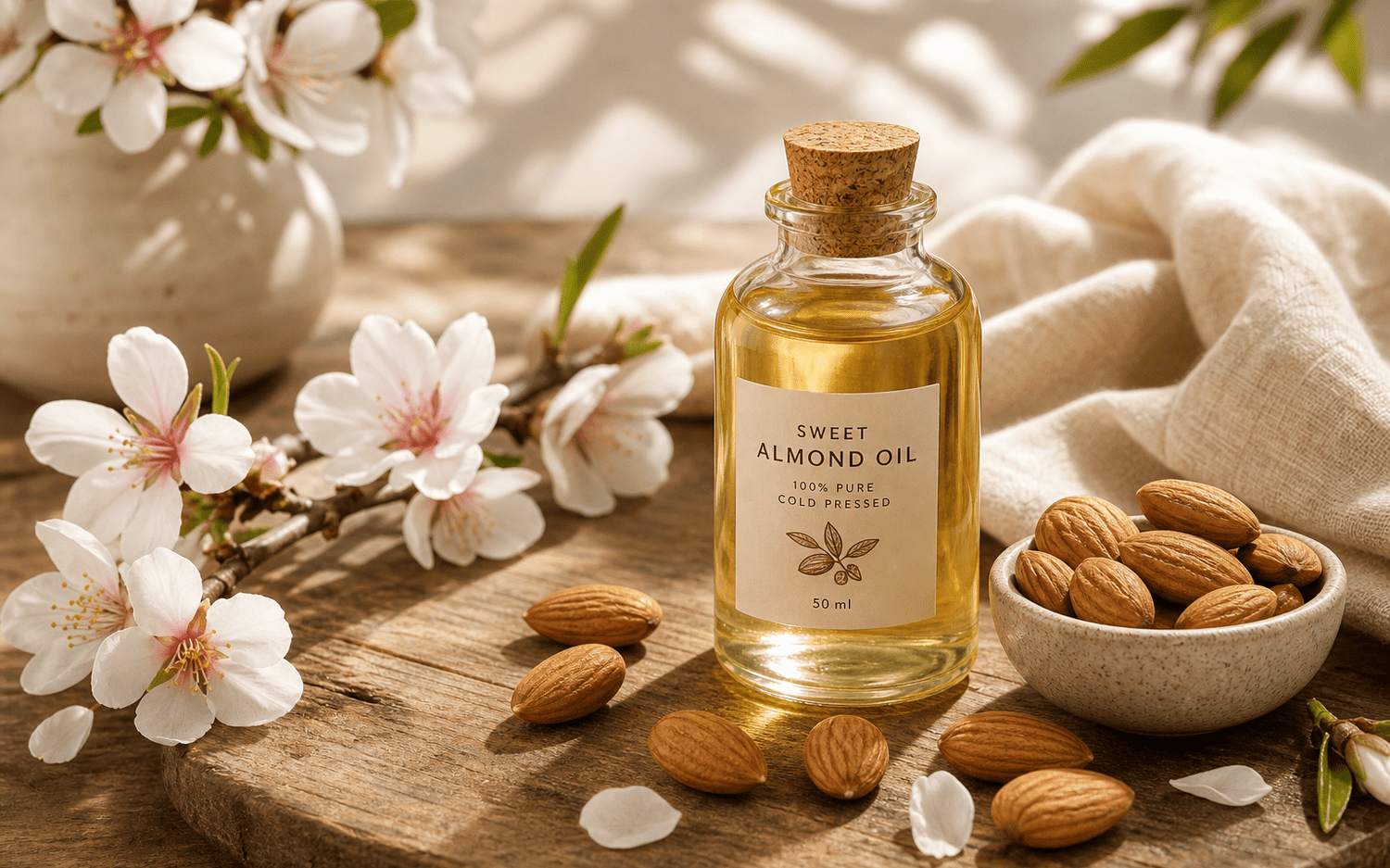
Sweet almond oil (INCI: Prunus Amygdalus Dulcis Oil) is one of the most versatile and forgiving carrier oils a formulator can keep on the bench, and it shines especially well in facial care. If you've ever searched for an almond oil for face recipe that feels lightweight yet genuinely nourishing, this is the oil that quietly delivers time after time. Its appeal isn't marketing fluff, it's chemistry. With a balanced fatty acid profile dominated by oleic and linoleic acids, almond oil sits comfortably between rich and light, making it suitable for an impressively wide range of skin types.
In this article we'll explore what's happening at a molecular level, realistic ways to use almond oil for the face, and practical formulation tips drawn from years of supporting DIY skincare makers.
The Science: What's Actually Inside Almond Oil
The reason sweet almond oil performs so beautifully on facial skin comes down to its fatty acid composition. It's rich in oleic acid (omega-9), a monounsaturated fatty acid that gives the oil its cushiony, conditioning feel and helps soften the appearance of dry, tight skin. Alongside this sits a meaningful proportion of linoleic acid (omega-6), a polyunsaturated fatty acid that supports the skin's natural moisture barrier and tends to feel lighter on the skin.
This oleic-to-linoleic balance is the key. Oils very high in oleic acid can feel heavy on oilier complexions, while oils very high in linoleic acid can feel too dry on parched skin. Almond oil's middle-ground profile is why it's traditionally used across so many skin types and why it's such a reliable base for facial oils and serums.
It also naturally contains tocopherols (vitamin E) and phytosterols, plant-derived compounds that contribute to the oil's smooth, emollient skin feel. As with any unsaturated plant oil, it benefits from sensible storage, cool, dark and tightly capped, to keep it fresh.
How Almond Oil Behaves on the Skin
On the face, almond oil works primarily as an emollient and occlusive softener. It helps reduce transepidermal water loss by forming a breathable layer over the skin, leaving it feeling supple rather than greasy. Its moderate spreadability makes it lovely for facial massage and for "slip" in balms and serums, where you want the product to glide without dragging.
Ways to Use Almond Oil for the Face
1. A Simple Single-Oil Facial Treatment
At its most basic, sweet almond oil can be used neat as a nighttime facial oil. A few drops pressed gently into clean, slightly damp skin is often all that's needed. A little goes a long way. Because it's a carrier oil rather than an active or essential oil, it's well tolerated by many people, though everyone's skin is individual, so introduce any new product gradually.
2. A Custom Facial Oil Blend
Almond oil makes an excellent base for a bespoke facial oil. Use it as the bulk of your oil phase and blend with smaller amounts of more specialised oils to tailor the feel and properties. For an even lighter finish on combination skin, you can pair it with a faster-absorbing oil; for extra richness on dry skin, blend in a more occlusive oil. This is where the joy of DIY formulating really comes alive.
3. A Gentle Oil Cleanser
Almond oil's slip and solvency make it a natural fit for oil cleansing. Massaged over dry skin, it helps loosen the day's grime and make-up before being emulsified away with a warm, damp cloth. Many makers build a cleansing blend around almond oil for exactly this reason.
4. The Oil Phase of Creams and Serums
In emulsions, almond oil is a workhorse oil-phase ingredient. It blends easily with emulsifiers, contributes a pleasant skin feel, and rarely causes problems in a formula. If you're building your first face cream, it's a forgiving oil to start with. To explore the principles of bringing oil and water together, our guide on making your own creams and lotions is a helpful starting point.
Formulation Tips from the Bench
- Always add an antioxidant. Because almond oil contains unsaturated fatty acids, blending in a little Vitamin E (INCI: Tocopherol) helps protect your oil phase from oxidation and extends the freshness of your finished product.
- Mind your preservation. Anhydrous (water-free) oil blends don't strictly require a preservative, but the moment any water is introduced, including a damp bathroom, you'll need a suitable broad-spectrum preservative. Our article on why your products need a preservative explains this in plain language.
- Layer for absorption. Applying facial oil to slightly damp skin helps it spread further and feel less greasy, so you use less product.
- Pair thoughtfully with essential oils. Almond oil is an ideal carrier for diluting essential oils for facial use. Keep facial concentrations low and conservative, and observe relevant IFRA guidance for any fragrance materials you add.
Frequently Asked Questions
Q: Is sweet almond oil good for oily or acne-prone facial skin?
A: Almond oil's balanced fatty acid profile means many people with combination skin get on well with it, though it leans slightly towards the richer side. If your skin runs very oily, use it sparingly or blend it with a lighter, faster-absorbing oil. As everyone's skin is different, introduce it gradually.
Q: Can I use almond oil for face massage?
A: Yes. Its moderate spreadability and cushiony slip make sweet almond oil a popular choice for facial massage. You only need a few drops, and warming it briefly between your palms helps it glide.
Q: What's the difference between sweet almond oil and bitter almond oil?
A: Cosmetic formulators use sweet almond oil (Prunus Amygdalus Dulcis Oil), which is the fixed carrier oil pressed from sweet almonds. Bitter almond is a different material entirely and is not used in the same way. Always check the INCI name on your label to be sure you have the right oil.
Q: Does almond oil need a patch test?
A: As a carrier oil it's generally well tolerated, but since nut-derived ingredients can be a concern for some, and skin is individual, it's sensible to trial any new product on a small area first.
Q: How should I store almond oil to keep it fresh?
A: Keep it cool, dark and tightly capped, away from heat and light. Adding a small amount of Vitamin E (Tocopherol) to your blends helps protect the unsaturated oils from going off.
Ready to Formulate?
Sweet almond oil is one of those dependable ingredients every facial-care formulator returns to again and again. Gentle in feel, balanced in chemistry, and endlessly blendable. Explore our Sweet Almond Oil as the foundation of your next facial oil or cream, reach for Vitamin E (Tocopherol) to keep your oil phase fresh, and have a look at our wider range of carrier oils to build the perfect bespoke blend for your skin. Happy formulating!